Summarise blog with AI


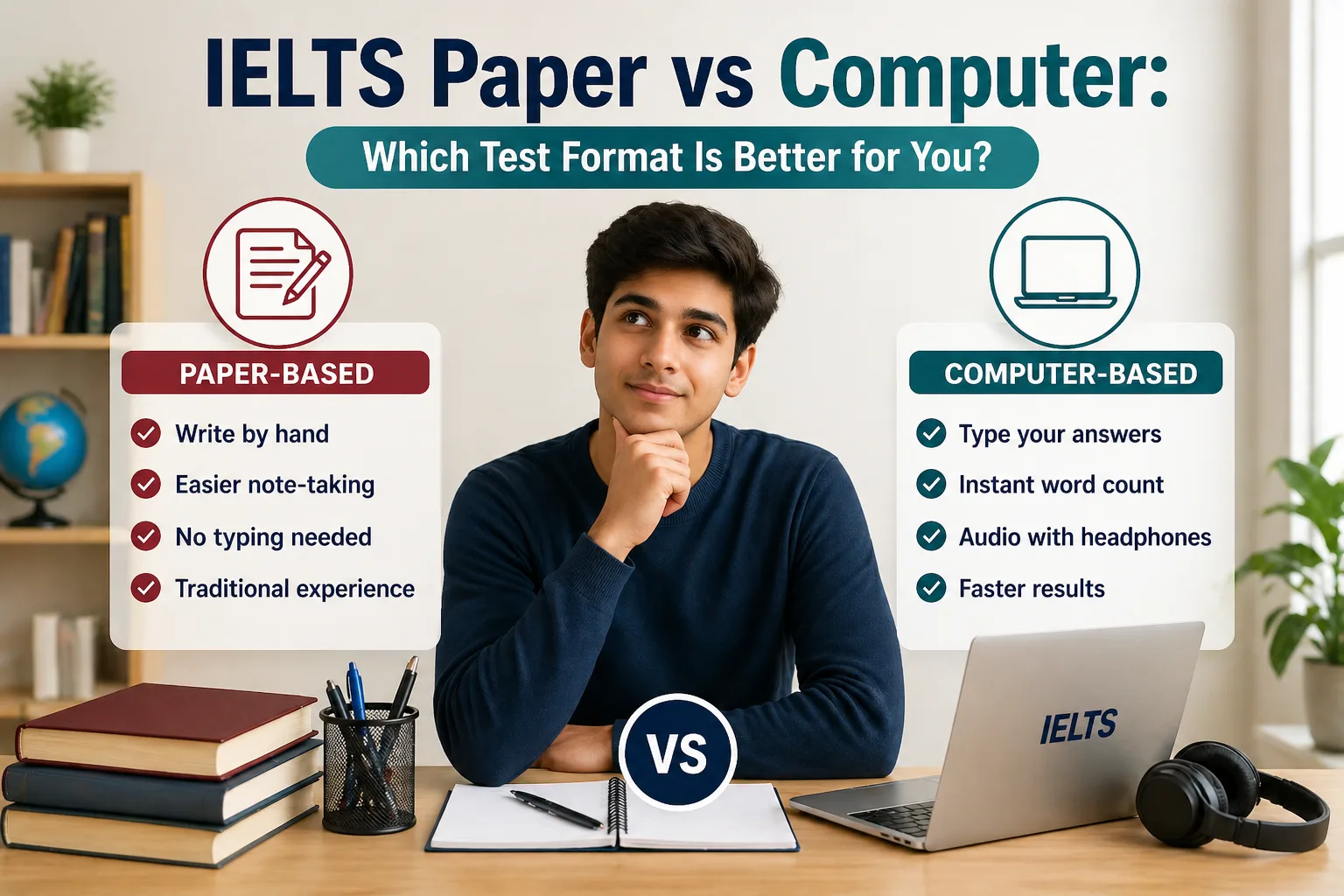
IELTS Paper vs Computer: Which Test Format Is Better for You?
- 14 min read

Last updated on 27 Apr 2026
Summarise blog with AI
Introduction
IELTS stands for “International English Language Test System.” Make your decision to take the IELTS test--you have two versions of the IELTS test including PBT (Paper Based Test) and IBT (Internet Based Test). In fact, both formats evaluate the same skills—Listening, Reading, Writing, and Speaking—and have actual scoring systems, and your experience of taking both kinds of test would be your good choice.
Both types of tests are taken as the internationally accredited English proficiency test---you will understand the level of your English in four modules including speaking, reading, writing and listening.
In this given article, we’ll be giving the key features, advantages, and drawbacks of each format to assist you decide which one becomes your choice discussing your strengths, behavior and your preparation in exam.
What Is the Paper-Based IELTS Test?
The paper-based ielts practice test is the old format of the IELTS exam (this format is going to be replaced with computer test from June 2026) where you complete the Listening, Reading, and Writing sections using pen and paper at a test center. Paper based tests have both advantages and disadvantages. The given discussion will clarify your doubts between two kinds of test giving both sides pointwise.
In this format:
- Listening: In this listening test, you are going to listen to the audio between 2-4 speakers. There are four sections including telephone conversation, monologue, group discussion and again monologue. Finally, you get extra time (usually 10 minutes) to shift your answers to an answer sheet. Be wise when you answer.
- Reading: You read passages printed on paper and write your answers directly on the answer sheet. Three powers you need to develop i.e Scanning, Skimming and Vocabulary.
- Writing: There are two tasks including describing the image (Bar diagram, pie chart, graph, map, flow chart, life cycle, table and other picture, and another one is essay writing.
What Is the Computer-Delivered IELTS Test?
In fact, the computer-delivered IELTS test is a modern version of the IELTS exam where you complete the Listening, Reading, and Writing sections on a computer at an official test center. This can be done with the help of invigilators—you need to follow the rules in the examination center as well.
In this format:
- Listening: You listen to recordings through headphones and type your answers directly into the computer. At the end of each half of the section (1-5 / 5-10), you are given 30 sec time to review your answers.
- Reading: You read passages on the computer screen and select or type your answers using the keyboard and mouse. You need to be familiar with computer at this time.
- Writing: You type your essays on the computer, making it easier to edit, delete, and reorganize your responses.
Key Differences Between IELTS Paper and Computer Tests
To match your strengths and preferences, you need to understand the differences between IELTS paper and IELTS computer tests, otherwise you may end up facing a lot of issues. ALFA IELTS portal along with the mentors can help you to solve your problems.
Writing Method (Handwritten vs Typing)
- Paper-Based: You need to write on paper making your handwriting neat and clean. Cursive handwriting is not allowed; your writing needs to be fair enough.
- Computer-Based: You type your responses using a keyboard. You will get a chance to copy paste, edit and proofread after you finish your writing.
1. Result Time
- Paper-Based: Results are usually available in about 13 business days.
- Computer-Based: Results are much faster, mainly within 3–5 business days.
2. Test Dates Availability
- Paper-Based: Test dates are limited (usually four times per month).
- Computer-Based: More flexible, with multiple test dates available each week in many locations. Mainly cities of the country are responsible for conducting the test.
3. Navigation and Answer Editing
- Paper-Based: You manually flip pages and can easily underline or highlight text.
- Computer-Based: You can quickly navigate between questions, highlight text digitally, and edit answers without rewriting. Both have both positive and negative sides. It depends on how the candidates give the test.
IELTS Listening Section: Paper vs Computer Experience
The most noticeable aspect of IELTS paper based and computer tests can be realized in exam time. While the content and difficulty are the same, the test-taking experience varies in a few important ways. They are:
1. Answer Transfer Time Differences
- Paper-Based: You write answers in the question booklet while listening and get an extra 10 minutes at the end to transfer them to the answer sheet. This allows time to check spelling and review answers. Examinees feel relieved unlike reading tests.
- Computer-Based: You type answers directly during the test, so there’s no separate transfer time. Else, you get about 2 minutes at the end to review your responses.
2. Headphones vs Speaker Setup
- Paper-Based: Audio is usually played through speakers in the room (though some centers may provide headphones). Sound quality can vary depending on seating position. Examinees can increase and decrease the volume as per their convenience. The heart palpitation starts when they listen to the audio sound at first.
- Computer-Based: You use individual headphones, which provide clearer audio and better concentration with less background noise. The cordless headset seems to be standard with good quality.
3. Typing vs Writing Answers
- Paper-Based: You write answers by hand. This can be easier for quick note-taking but requires neat handwriting and careful spelling during transfer.
- Computer-Based: You type your answers directly. This is faster for many people and reduces handwriting issues, but requires good typing speed and accuracy.
IELTS Speaking Test: Is There Any Difference?
When it comes to the IELTS Speaking test, there is no difference between the paper-based and computer-delivered formats.
- Face-to-Face Interaction: In both formats, the Speaking test is conducted in person with a real examiner. This allows for a natural conversation, where the examiner can understand your fluency, pronunciation, and ability to communicate effectively.
- Certified Examiner: The test is always carried out by a trained and certified IELTS examiner, ensuring consistency, fairness, and accurate evaluation across all candidates.
- Same Structure and Timing: The format remains identical—typically lasting 11–14 minutes and divided into three parts: introduction, long turn (cue card), and discussion.
Advantages of the Paper-Based IELTS Test
The paper-based IELTS test remains a popular choice, especially for students who prefer a more traditional exam experience. Here are some key advantages:
1. Familiar Exam Format
Many students are used to writing exams on paper, especially in school or university settings. This familiarity can reduce stress and help you feel more confident on test day.
2. Easier Reading on Paper
Reading long passages on paper is often more comfortable than on a screen. You can quickly scan, underline, circle keywords, and make notes directly on the question booklet.
3. Flexible Note-Taking
In both the Reading and Listening sections, you can freely write notes, highlight important information, and mark answers before transferring them neatly.
Advantages of the Computer-Delivered IELTS Test
The computer-delivered IELTS test offers several benefits, especially for candidates who are comfortable with technology and prefer faster, more flexible testing experience.
1. Faster Results
One of the biggest advantages is the quick turnaround time. Results are typically available within 3–5 days, which is ideal if you’re on a tight deadline for applications.
2. More Test Date Availability
Computer-based tests are offered multiple times a week in many test centers, giving you greater flexibility to choose a convenient date.
3. Easy Editing in Writing
Typing your essays allows you to quickly edit, delete, and reorganize your ideas without rewriting entire sections. This can save time and improve the overall structure of your writing.
IELTS Result Time: Paper vs Computer Test
One of the most important differences between the paper-based and computer-delivered IELTS tests is how quickly you receive your results.
Paper-Based IELTS Result Time
- Results are typically released 13 days after the test date.
- This longer wait is due to the manual processing of handwritten answer sheets.
Computer-Delivered IELTS Result Time
- Results are usually available within 3 to 5 days.
- Faster processing is possible because answers are submitted and assessed digitally.
Pros and Cons of IELTS Computer-Based Test
The computer-delivered IELTS test offers many advantages, but it may not be the best fit for everyone. Here’s a balanced look at its pros and cons:
Pros
1. Faster Results
You receive your results within 3–5 days, which is ideal for urgent applications.
2. Flexible Test Dates
Available multiple times a week, making it easier to find a convenient slot.
3. Easy Editing in Writing
You can edit, delete, and rearrange your answers quickly without rewriting, improving efficiency.
4. Word Count Display
A built-in word counter helps you meet Writing task requirements easily.
5. Clear Audio with Headphones
Better listening experience with less noise and clearer sound quality.
6. Quick Navigation
You can move between questions easily, highlight text, and review answers efficiently.
7. Faster Typing for Many Candidates
Typing can be quicker than handwriting, helping you manage time better.
Cons
1. Requires Typing Skills
If you type slowly or make frequent errors, it may affect your performance.
2. Screen Fatigue
Reading long passages on a screen can be tiring for some candidates.
3. Limited Note-Taking Flexibility
Although you can highlight text, it’s not as natural as writing notes freely on paper.
4. Less Time for Review in Listening
Only 2 minutes to check answers, compared to 10 minutes in the paper-based test.
5. Technical Comfort Needed
Candidates unfamiliar with computers may feel uncomfortable or distracted.
Pros and Cons of IELTS Paper-Based Test
The paper-based IELTS test is the traditional format and remains a preferred choice for many candidates. Here’s a clear look at its advantages and disadvantages:
Pros
1. Familiar Exam Experience
Most students are used to writing exams on paper, which can reduce anxiety and improve confidence.
2. Comfortable Reading
Reading from paper is often easier on the eyes, especially for long passages in the Reading section.
3. Flexible Note-Taking
You can underline, highlight, and write notes freely in the question booklet, which helps with understanding and planning.
4. Extra Time in Listening
You get 10 minutes to transfer answers, allowing you to check spelling and correct mistakes.
5. No Need for Typing Skills
You don’t need to worry about typing speed or computer familiarity.
6. Better for Visual Planning
Many candidates find it easier to brainstorm and structure essays when writing by hand.
Cons
1. Slower Results
Results take around 13 days, which can be a disadvantage if you’re on a deadline.
2. Limited Test Dates
Paper-based tests are offered less frequently, reducing flexibility in scheduling.
3. Handwriting Issues
Poor or unclear handwriting may affect how your answers are understood.
4. Harder to Edit Writing
Making changes requires crossing out or rewriting, which can be time-consuming.
5. Time Pressure in Writing
Writing by hand is generally slower than typing, which may impact completion time.
Challenges of the Paper-Based IELTS Test
1. Handwriting Speed and Clarity
Writing essays and answers by hand can be slower. If your handwriting is unclear, it may affect how examiners interpret your responses.
2. Limited Editing Options
Making corrections in the Writing section can be messy and time-consuming, as you need to cross out and rewrite parts of your answer.
3. Time Management in Writing
Since handwriting takes longer, some candidates struggle to complete both Writing tasks within the time limit.
Which IELTS Test Format Should You Choose?
Choosing between the PBT (Paper Based Test) and CBT (Computer Based Test) depends on your personal strengths, habits, and your preference. Here’s a simple guide to help you decide:
1. Typing Speed
- Choose Computer-Based if you can type quickly and accurately. It will save time, especially in the Writing section.
- Choose Paper-Based if you type slowly or make frequent typing errors.
2. Comfort with Technology
- Choose Computer-Based if you are comfortable using computers, navigating screens, and reading digitally.
- Choose Paper-Based if you prefer a traditional setup and feel more confident with pen and paper.
3. Writing Style Preference
- Choose Computer-Based if you like editing your work easily (cut, copy, paste) and organizing ideas quickly.
- Choose Paper-Based if you prefer planning and writing essays by hand and find it easier to think on paper.
Also Read: How Many Times Can You Take IELTS? Rules & Fees 2026
Tips for Choosing the Right IELTS Test Format
Selecting the right IELTS test format can make a real difference in your performance. Here are some practical tips to help you make the best choice:
1. Take a Practice Test in Both Formats
Before deciding, try the IELTS mock test in both paper and computer formats. This will help you identify where you feel more comfortable and perform better.
Taking mock tests in both formats not only helps you choose the right one but is also a proven strategy for those looking to understand how to improve IELTS band score. Consistent practice builds both confidence and accuracy.
2. Assess Your Typing Skills Honestly
If you can type quickly and accurately without looking at the keyboard, the computer-based test is a strong option. If not, the paper-based test may be safer.
3. Consider Your Reading Habits
Ask yourself: Do you prefer reading from a screen or paper? If screens tire your eyes, paper-based may suit you better.
Also Read: IELTS Update 2026: Big Changes, But Great News for Students!
FAQs
Is IELTS on computer easier than paper-based IELTS?
No, the difficulty level is the same. The only difference is how you take the test (typing vs handwriting, screen vs paper). It also depends on the preparation of the candidates.
Which IELTS test format is better: paper or computer?
It depends on the preparation of the candidates. The best format depends on your personal preference, typing skills, and your preparation.
Is the difficulty level the same for paper-based and computer-based IELTS?
Yes, both formats have the same level of difficulty, scoring system, and evaluation criteria.
Do both IELTS formats have the same question types?
Yes, the question types are identical in both formats for Listening, Reading, and Writing. However, the General Training Test (GT) and Academic Test (AT) are different in terms of questions mainly reading and writing modules.
Which IELTS format gives faster results?
The computer-based IELTS provides faster results, usually within 3–5 business days, compared to 13 days for paper-based.
Is the IELTS speaking test different in computer-based IELTS?
No, the Speaking test is the same in both formats—it is conducted face-to-face with a certified examiner.
Can I change my IELTS test format after booking?
In most cases, you cannot switch formats after booking. You may need to cancel and rebook, depending on the test center’s policy.
Is typing faster than handwriting in the IELTS writing test?
Yes, definitely—typing is faster and allows easy editing. However, if you are not good in typing, handwriting may be good choice for you.
Do universities accept both paper-based and computer-based IELTS?
Yes, both formats are equally accepted by universities, employers, and immigration authorities worldwide.
Which IELTS format should beginners choose?
Beginners should choose the format they feel best with. If not sure, try practice tests in both formats before thinking.

Ram Prasad Sharma
Author

Tags:
Share: